Showing posts with label Climate Change. Show all posts

Friday, 9 January 2015

Ugly Fruit & Veg

Firstly, Happy New Year! Today's post is going to be a quick one about food waste. As you may already know, this is a topic that keeps coming up here on Picnics Past & Present and for good reason. In my eyes, food waste is an extremely important environmental issue and is one that everybody can easily get involved in. 

The "Ugly Carrot", part of
 Intermarché's campaign for "Inglorious Fruits and Vegetables"

A few posts back we touched on the global food waste issue when we talked about the close relatives of perfect produce: the ugly fruit and veggies. EndFoodWaste have recently launched a new campaign on twitter and Facebook that focuses on aesthetically imperfect fruit and veggies (or "uglies"). Their campaign aims to rally the public to demand ugly fruit and veggies at major retailers worldwide in a fun and interactive way. According to their website, at least 20% of all produce is wasted because of its size, shape, colour, or appearance. The group have created an information sheet outlining 10 reasons why people should support ugly fruit and vegetables, which range from world hunger to climate change. To take part in this great new campaign (and to have some fun!), follow #UglyIsBeautiful on twitter and post your own pictures of your ugly beauties to @UglyFruitAndVeg - the best pics will be retweeted!
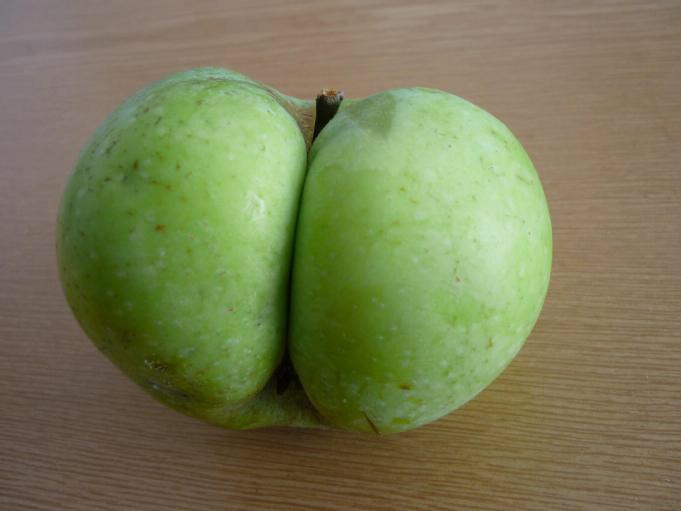

Embedded image permalink
Recent tweet from @UglyFruitAndVeg:
"I refuse to be the butt of your jokes"

If you want to go one step further and support the food waste cause, you can join the Feedback movement and pledge to reduce your food waste here. Feedback is the environmental organisation that campaigns to end food waste at every level of the food system.

Sunday, 30 November 2014

How Climate Change Could Transform Thanksgiving

Last Thursday was American Thanksgiving (in Canada, we celebrate it one month earlier) - so to all my American readers: Happy Thanksgiving! I was browsing the food news recently and came across a very interesting interactive article by Anna Codrea-Rado and Nice and Serious of the Guardian which highlights how climate change has the potential to transform our food, including our cherished Thanksgiving dinners. The article features a photograph of a typical Thanksgiving meal (shown below) - with Thanksgiving turkey and all the fixings. By clicking on the red "plus" symbol, information on how climate change could impact that particular food item is given. You can explore the article here.


Until next time!

Thursday, 27 November 2014

Environmental Impacts of Cocoa Production

Chocolate has been in the spotlight over the past few weeks. You'll undoubtedly have seen headlines such as this one, where leading chocolate producers like the Barry Callebaut Group and other industry experts warn about potential cocoa shortages by 2020. Demand for chocolate products is increasing, most notably in Asia over recent years, and experts fear that the crop simply won't be able to keep up. This isn't really news, however. Concerns over cocoa shortages have been repeatedly voiced over the last years, with some experts even predicting that chocolate will eventually be equivalent to caviar (The Independent, 2014).

Cocoa fruits hanging on branch of the cocoa plant
Cocoa tree with cocoa pods (Source: the Telegraph, 2014)

With this exploding interest in cocoa, one may wonder what might be the environmental impacts associated with cocoa production across the globe? I certainly have been, especially after my recent visit to Kew Gardens where I learnt about the history and uses of Theobroma cacao. A recent study by Ntiamoah and Afrane (2008) directly addresses this question using a life cycle approach for the Ghanaian cocoa industry. Before delving into the details, let's first uncover a few quick facts about cocoa.  

Cocoa Facts

The genus Theobroma originated in South America millions of years ago, and includes a total of twenty-two species (cacao being the most widely known). Archaeological evidence of T. cacao as a domesticated crop can be traced to the Maya. The recipe for hot chocolate was brought to Spain by Hernan Cortés in 1528, though the drink did not gain popularity in Spanish courts until sugar was added to the recipe (ICCO, 2014). 

Today, T. cacao is an important cash crop that is grown in the humid tropics (in countries 10ºN and 10ºS of the equator). The largest producers of T. cacao, in order of importance, are Côte d'Ivoire, Ghana and Indonesia (FAO, 2001). 

Map showing countries where T. cocao is grown (Source: Rainforest Alliance, 2014)

The climatic conditions which favour the growth of T. cacao are high temperatures (max. mean 30-32ºC, min. 18 - 21ºC) and high moisture. T. cacao is particularly sensitive to rainfall, and thrives in locations which receive 1500-2000mm/year. The crop has traditionally been grown in shade, as the species is capable of making optimum use of available light (ICCO, 2014). In 2001, approximately 6.5 million hectares of land were planted with the crop in a total of 57 countries. The average yield is of 400kg beans/ha/year (FAO, 2001).

Cocoa is harvested by removing ripe cocoa pods from the trunk and branches of the cocoa tree, and opening the pods to remove the wet cocoa beans. The harvested cocoa beans are then fermented and dried out. Cocoa beans then undergo processing to be transformed into chocolate products (the processing procedure can be viewed here) (ICCO, 2014).

Environmental Impacts of Cocoa Production and Processing in Ghana

According to the ICCO (2014), an estimated 70% of world cocoa production is grown by smallholders in low input and low intensity agricultural systems. Because cocoa requires shade and forest cover and has relatively few inputs, it has the smallest impact of all the tropical cash crops. However, widespread clearing of forests for intensive cocoa production has the potential to result in the destruction of ecosystems, the loss of biodiversity, soil erosion, stream sedimentation and health/environmental issues related to agrochemicals and runoff (ICCO FAQs, 2014).


The beans are bought by traders or middle-men who sell them to wholesalers; the wholesalers sell them on in bulk to large cocoa companies.
Cocoa beans ready for sale and distribution (Source: CNN, 2014)

In their recent study, Ntiamoah and Afrane (2008) used a life cycle approach to identify the environmental impacts of cocoa production and processing in Ghana, the world's second largest producer of cocoa beans. In Ghana, the government has recently implemented the Cocoa Disease and Pest Control Project (CODAPEC) which aims to address the issue of pests and diseases on cocoa farms. The ultimate goal of the project was to improve the livelihood of farmers and reduce poverty by boosting cocoa production. Under CODAPEC, insecticides and fungicides were sprayed across Ghanaian cocoa farms free of charge. Though Ntiamoah and Afrane (2008) acknowledge the benefits of the programme, their work raises valid concerns about the environmental impacts associated with a growing cocoa industry.

In order to identify the potential environmental impacts associated with cocoa production in Ghaha, Ntiamoah and Afrane (2008) used a life cycle assessment (LCA) tool in accordance with the ISO 14040-14043 series procedural framework. The system was divided into 3 main stages, namely cocoa production, transportation, industrial processing of cocoa beans. The functional unit used in their study was 1kg of processed cocoa beans.

Overall, the authors reported that freshwater aquatic eco-toxicity, human toxicity, and global warming potentials were the most significant environmental impacts associated with the system. Below is a summary of their results, grouped by the three mains stages.

Cocoa Production Stage

Cocoa production makes the largest contribution to eutrophication, ozone layer depletion, freshwater aquatic eco-toxicity, human toxicity, and terrestrial eco-toxicity (average contributions greater than 96%). Ntiamoah and Afrane (2008) identified the production and use of fertilizers and pesticides as a major cause of environmental burden. Emissions of halogens and CFCs during pesticide production were identified as the main source of ozone layer depletion. Eutrophication was found to be caused by nutrient leakage during cultivation and emission of phosphates. For the toxicity groups, the main source was heavy metal content in phosphorus fertilizers and leakage of pesticides. Other impacts identified by the authors were solid waste in the form of pod husks and loss of biodiversity from clearing of original vegetation.


Husks make up 76 per cent of the cocoa bean fruit
Cocoa pod husks (Source: Sustainable Review, 2014)
Cocoa Processing Stage

In terms of cocoa processing, Ntiamoah and Afrane (2008) identified industrialised processing of cocoa beans as the most important contributor to photo-chemical ozone creation potential, global warming potential, atmospheric acidification potential, and abiotic depletion potential. The production and combustion of fossil fuels were identified as the principal cause of the environmental impacts of this stage. 

Transportation Stage

The authors reported that the transportation stage was the most environmentally-friendly, with no significant contributions to the impact categories.

In addition to quantifying the environmental impacts associated with the three main stages of cocoa production in Ghana, the authors put forth several recommendations. Among the most important recommendations were the replacement of diesel fuel by natural gas in the cocoa processing stage and the exclusive use of compost instead of inorganic fertilizers.

I certainly learnt a lot about cocoa production, and was impressed by the use of an LCA tool by Ntiamoah and Afrane (2008) to quantify the environmental impacts of the cocoa industry in Ghana. I was also rather surprised by some of the environmental and health impacts that result from this industry. It's definitely going to be something I think about the next time I purchase a chocolate bar! Were you surprised by the results of the life cycle analysis, or about any of the cocoa facts we talked about today? I'd love to hear your thoughts!

Friday, 26 September 2014

UN Climate Summit & Meat Free Mondays

There's certainly been lots going on in the climate change front over the last week. I find this extremely exciting, especially as a recent graduate in the climate change field. It's really wonderful to see that both individuals and international governments are taking climate change seriously, are pushing for action, and are acknowledging that it isn't a "far-away" problem. The world-wide demonstrations preceding the UN emergency Climate Summit in New York last weekend were truly inspiring - and it looks like governments have heard us. For those of you that aren't familiar with the 2014 UN Climate Change Summit, below is a short summary (a longer one can be found here on the UN website):


-The purpose of the summit was to "raise political momentum for a meaningful universal climate agreement in Paris 2015 and to galvanize transformative action in all countries to reduce emissions and build resilience to the adverse impacts of climate change".

-Leaders from government, business, and civil society were asked to build a global vision for low-carbon economic growth and to advance climate action via various pathways.

-The main points of discussion for the global vision on climate change were the following: convergence on a long-term vision; cutting emissions; moving markets and mobilizing money; pricing carbon; strengthening resilience; and mobilizing new coalitions.  

-100 Heads of State and Government attended the Summit.


What does all this climate change talk have to do with food? Well, as we've talked about in previous posts, the food industry is heavily intertwined in our complex climate change problem. On the one side, large-scale food production is a dominant greenhouse gas (GHG) emissions contributor, and therefore a major contributor to anthropogenic climate change (Vermeulen, 2012). On the other side, climate change threatens global food production through its negative effects such as drought and limiting water resources (IPCC, 2007). 

Something else really exciting happened this week. Ahead of the UN Climate Summit, Sir Paul McCartney released an original song, Meat Free Monday, in order to promote his campaign on the reduction of meat consumption to combat climate change.  You can listen to the song in the video below - I hope you'll enjoy it as much as I did! If you're interested in pledging your support for this campaign, you can do so here. 


Saturday, 20 September 2014

Buddha Pears

Good afternoon dear readers,

I came across an interesting article today by Rebecca Rupp of the National Geographic's The Plate about pears shaped like baby buddhas. Yes, you heard me correctly, pears shaped like baby buddhas!

Photo of a buddha pear.
Pear shaped like a baby buddha (photo from the National Geographic)
A while back we talked about a National Geographic series, the Future of Food, which aims to investigate how food will change with increasing pressures such as climate change and growing global populations. This article on buddha pears is part of this series, despite its rather light and airy tone (in case you're wondering, the pears are shaped this way thanks to specially designed molds in which the pears are grown). However, the article isn't all about funny-looking fruit. The main message that Rupp is trying to convey is that food is routinely wasted because it doesn't meet society's aesthetic requirements. Rupp goes on to talk about regulations which only allow the sale of produce that conforms with certain aesthetic standards and what certain companies are doing to try to decrease the waste of "imperfect" produce.

Personally, I love it when I buy a bag of carrots to find a forked one, or cutting into a bunch of beets to find that one of them has two heads. On the whole, I don't tend to favour fruits and vegetables which seem more perfect than others. I was wondering how you feel about what your fruits and veggies look like? Do you prefer consuming vegetables and fruits that all fit the same mold, so to speak? I'd love to hear your thoughts!

Tuesday, 2 September 2014

Food Demand & Climate Change

Have you noticed the food headlines (e.g. here and here) of late? A new study published by engineers, plant scientists, and food specialists from the Universities of Cambridge and Aberdeen used a transparent, data-driven model to demonstrate that projected food demand will drive agricultural expansion, contributing to critical environmental issues such as the loss of biodiversity, climate change and pollution. The authors, Bajželj et al. (2014), warn that it is absolutely essential to find ways to achieve food security without promoting the negative side effects of agricultural expansion and increased greenhouse gas (GHG) emissions.

A cow
Cattle livestock. Source: The Guardian (2014)
Bajželj et al. (2014)'s study aimed to estimate the environmental implications of the projected increase in food demand by 2050. They were also interested in quantifying the extent to which measures including sustainable intensification and demand reduction could reverse these negative effects. The authors' approach was to use a model of the current global land system based on emprical data, with 2009 as a base year. The model included 2 main components, namely an analysis of land distribution leading to the allocation of land-use change, natural ecosystem losses, and GHG emissions, and a map of agricultural biomass flows. Based on their analyses, the authors concluded that an increased demand for inefficient pathways of food supply such as livestock products causes the food production system to become larger and increasingly inefficient. 

The authors then went on to investigate 6 future scenarios based on agricultural intensification, waste reduction and dietary preferences. Their results indicated that increases in agricultural expansion and agriculture-related GHG emissions were only prevented when significant elements of demand reduction were included. Bajželj et al. (2014) suggest the reduction of meat consumption and an overall improvement of diet as potential solutions to avoid reaching dangerous levels of climate change.

We touched on meat consumption in previous posts (e.g. here and here), and saw that demand for animal products has been increasing in recent decades. Based on the evidence presented in scientific studies such as the one described above, would you be willing to decrease your intake of livestock products to take action on climate change? I, for one, am certainly convinced!

I'd love to hear your thoughts on meat consumption and climate change, or any aspect of the food production system at all. Feel free to share in the comments section below. 

Wednesday, 30 July 2014

The Future of Food

Good afternoon dear readers! 

Just a quick little post for you this sunny Wednesday afternoon. I stumbled upon this National Geographic special series, the Future of of FOOD while taking a break from my pollen analysis (one month to go!). In their eight-month series, National Geographic is investigating the future of food in a world where the climate is changing at an unprecedented rate and global populations are rapidly increasing. You can check out the trailer below to get an idea of what the series is all about, and have a look here for a 15-minute talk summarising each part of the series by Dennis Dimick, executive environment director at National Geographic. I'll definitely be checking out the series on the evolution of diet in particular. I was instantly intrigued when Dennis mentioned "the idea that food is what really made us human" - I couldn't agree more! 


Until next time!