Showing posts with label Food Waste. Show all posts

Friday, 9 January 2015

Ugly Fruit & Veg

Firstly, Happy New Year! Today's post is going to be a quick one about food waste. As you may already know, this is a topic that keeps coming up here on Picnics Past & Present and for good reason. In my eyes, food waste is an extremely important environmental issue and is one that everybody can easily get involved in. 

The "Ugly Carrot", part of
 Intermarché's campaign for "Inglorious Fruits and Vegetables"

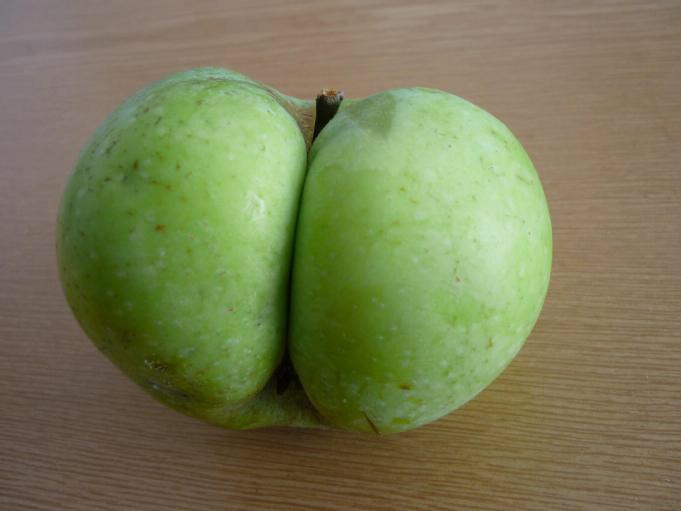
A few posts back we touched on the global food waste issue when we talked about the close relatives of perfect produce: the ugly fruit and veggies. EndFoodWaste have recently launched a new campaign on twitter and Facebook that focuses on aesthetically imperfect fruit and veggies (or "uglies"). Their campaign aims to rally the public to demand ugly fruit and veggies at major retailers worldwide in a fun and interactive way. According to their website, at least 20% of all produce is wasted because of its size, shape, colour, or appearance. The group have created an information sheet outlining 10 reasons why people should support ugly fruit and vegetables, which range from world hunger to climate change. To take part in this great new campaign (and to have some fun!), follow #UglyIsBeautiful on twitter and post your own pictures of your ugly beauties to @UglyFruitAndVeg - the best pics will be retweeted!


Embedded image permalink
Recent tweet from @UglyFruitAndVeg:
"I refuse to be the butt of your jokes"

If you want to go one step further and support the food waste cause, you can join the Feedback movement and pledge to reduce your food waste here. Feedback is the environmental organisation that campaigns to end food waste at every level of the food system.

Monday, 20 October 2014

Food-Waste Rebel

Remember a while back when we talked about Tristram Stuart and his campaigns to end food waste? He's been recently featured as a National Geographic 2014 Emerging Explorer, and has released an excellent new video. You can check it out here:


I'll be back soon to talk about the environmental impacts of cocoa and coffee production!

Saturday, 20 September 2014

Buddha Pears

Good afternoon dear readers,

I came across an interesting article today by Rebecca Rupp of the National Geographic's The Plate about pears shaped like baby buddhas. Yes, you heard me correctly, pears shaped like baby buddhas!

Photo of a buddha pear.
Pear shaped like a baby buddha (photo from the National Geographic)
A while back we talked about a National Geographic series, the Future of Food, which aims to investigate how food will change with increasing pressures such as climate change and growing global populations. This article on buddha pears is part of this series, despite its rather light and airy tone (in case you're wondering, the pears are shaped this way thanks to specially designed molds in which the pears are grown). However, the article isn't all about funny-looking fruit. The main message that Rupp is trying to convey is that food is routinely wasted because it doesn't meet society's aesthetic requirements. Rupp goes on to talk about regulations which only allow the sale of produce that conforms with certain aesthetic standards and what certain companies are doing to try to decrease the waste of "imperfect" produce.

Personally, I love it when I buy a bag of carrots to find a forked one, or cutting into a bunch of beets to find that one of them has two heads. On the whole, I don't tend to favour fruits and vegetables which seem more perfect than others. I was wondering how you feel about what your fruits and veggies look like? Do you prefer consuming vegetables and fruits that all fit the same mold, so to speak? I'd love to hear your thoughts!

Saturday, 5 July 2014

Info Graphic

Once again, I've disappeared from the blogosphere for an extended period of time - my apologies, dear readers! 

After my term papers and exams were completed in the beginning of May, I envisioned myself having much more free time to dedicate to blogging about food and the environment. But things have been in  full swing with my Masters dissertation since then, and I have been spending most of my time in the lab and behind a light microscope examining fossil pollen. For my project, I am reconstructing recent anthropogenic vegetation changes using detailed ultra-high resolution pollen analyses from the Portuguese Margin. I'm really enjoying it so far, but I must admit it's quite the learning curve with these biological proxies of environmental change! Below are a couple photos of some of the types of taxa I typically encounter under the microscope:


Figure 1. Light microscope and scanning electron microscope (SEM) images of fossil pollen grains. Left: Compositae tubuliflorae, middle: Pinus (SEM image), right: Tilia. Images courtesy of the University of Arizona.

But all things pollen aside, let's talk about food and our individual environmental footprints. As we touched on in previous posts (for instance here and here), I often think about the environmental footprint of the food I consume and cook with each day. Living in a big city like London, it's all too easy to fall into the "to go" and "disposable" mentality. With a busy schedule and constantly rushing from point A to point B, the thought of washing extra dishes or even cooking a simple meal can seem daunting - especially when all of your heart's culinary desires can be delivered to your doorstep within minutes.

Sometimes all that's needed is a gentle reminder and some simple ideas for more environmentally-friendly food habits. In the spirit of all this, I found this really interesting info-graphic created by Food Establishments Recycling Nutrients (FERN), a Lebanese non-governmental organisation that specialises in facilitating composting and recycling in restaurants (below). 
An infographic for UNEP’s World Environment Day 2013 sharing techniques for reducing food waste.

This info-graphic is filled with great tips and habits that can really improve our individual environmental footprints. My favourite aspects include: "first in, first out", "expiration dates aren't throw-away dates" and the focus on food waste. Personally, I find that making a grocery list and a meal plan and sticking to it is an excellent way to ensure that all the food you purchase is used. I also found the idea of keeping a list next to the garbage can for a week to monitor how much food is wasted is an excellent one - I may conduct the experiment and report my results on the blog, so stay tuned for that!

What are you favourite aspects of this info-graphic? Are there any wasteful habits you'd like to kick? What is your favourite tip on reducing food waste at home?

Until next time!

Thursday, 12 December 2013

Food Waste Follow-Up, and a Recipe

Before going on to explore some of the modern environmental impacts of global food production, here's an update on my October post about food waste in the news.


What's been going on since then? A report was released by WRAP in November which builds upon their previous research. The results for 2012 were quite interesting: the amount of food waste decreased by 21% between 2007 and 2012, but 4.2 million tonnes of food were still wasted during the year (approximately equal to £12.5 billion). In terms of environmental impacts, avoidable food waste from the UK was associated with approximately 17 million tonnes of CO2 equivalent. In addition, estimates of the amount of land required to produce the food that is wasted were created for the first time. The total land area was found to be approximately 91% of the size of Wales.

Globally, food waste accounts for more greenhouse gas emissions than any country, with the exception of the US and China. In a recent report, the U.N. Food and Agriculture Organisation (FAO) created figures on the carbon footprint associated with food waste which were estimated at 3.3 billion tonnes of CO2 per year. These results are quite distressing and underline the urgent need for a global strategy for a sustainable food system. In their recent study, Godfray et al. (2010) discuss possible solutions for sustainable agricultural intensification, but identify that there is no clear-cut solution. With growing global populations, the issue of food waste is one that will not quickly disappear.

In other food waste related news, The Ecologist recently wrote a piece about the Pig Idea in their article titled Let them eat waste! In November, a knees-up was hosted in Trafalgar Square by the organisation where eight pigs fed entirely on food waste were devoured. The Pig Idea endeavours to get the feeding of food waste to livestock back on the table to avoid unnecessarily growing animal feed. According to studies by Myer et al. (1999) and Westendorf et al. (1998), food waste has nutritional value and could be used in swine diets without compromising the quality and flavour of the meat. What are your thoughts on feeding food waste to livestock? 


Does all this make you eager to take action on food waste in your daily life? Check if your council provides food waste recycling services - Camden, for instance, provides an excellent food recycling service. Here's an informative little video on two different ways food waste can be recycled, namely in-vessel composting and anaerobic digestion. For more information on the effectiveness of these two methods of composting, see Kim et al. (2008) and Righi et al. (2013) respectively.


Aside from composting, there are other things you can do to improve your waste footprint. Not sure what to do with the vegetables in the bottom of your fridge that are almost at the end of their lives? An excellent way to use up old vegetables is to make a pot of soup - aside from reducing food waste, soups are very healthy, cheap and easy to make, and last a long time. To conclude this post, I'd like to share with you one of my favourite lentil soup recipes from a local restaurant called The Green Door in my hometown of Ottawa.

Thanks for reading!


Green Lentil Soup 
Recipe from the Green Door Vegetarian Cookbook


Ingredients:

1c green lentils
4c water
2 tbsp olive oil
1 diced onion
2 stalks diced celery
1 diced carrot
8c water or stock
1 clove garlic
3 bay leaves
1 tsp salt
1/2c chopped parsley

1. Wash and drain lentils, and place in pot. Add 4 cups water and bring to a boil. Lower heat and cook for 5 minutes, then drain.
2. In a soup pot, heat oil, saute onion, carrot, and celery until soft. 
3. Add water or stock and bring to a boil. 
4. Add lentils, garlic, bay leaves and salt (if using). 
5. Cook for 20 minutes or until lentils are well cooked. Adjust seasoning if necessary.
6. Serve topped with parsley, and enjoy!